
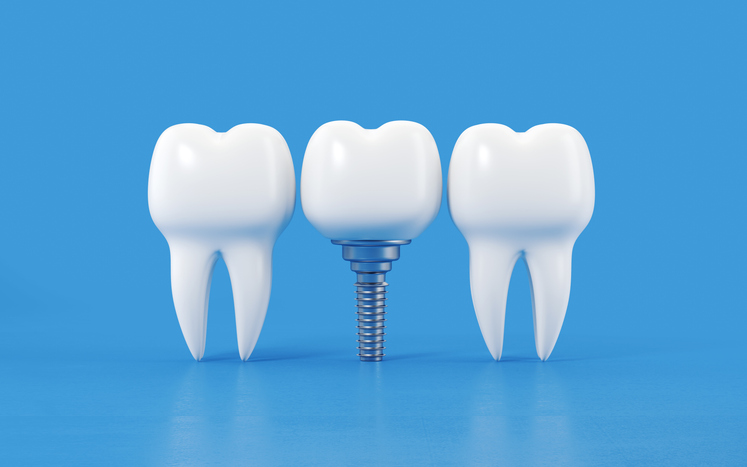
The number varies because a dental implant is three separate components plus whatever your mouth needs to be ready for them. Those three parts are the implant post, the abutment that connects it, and the crown you see when you smile. Then come the variables: bone grafting, a sinus lift, an extraction, and the materials chosen for your restoration. That is why two people replacing the same tooth can receive very different estimates.
At Periodontal Associates of Memphis, serving patients in Memphis and Collierville, TN, our board-certified periodontists, Dr. Mitchel S. Godat, Dr. Grant T. King, and Dr. Olga Byakina, build every implant estimate around your own exam and imaging. Below, we break a typical quote into its parts so you can see where the range comes from, what insurance tends to cover, and how to compare estimates between practices. For an overview of what our fees include, visit our cost of dental implants page.
The Three Parts of Every Implant Quote
Every implant restoration is built from the same three pieces, and each one is a separate part of your total cost.
- The implant post (fixture). A small titanium post placed into your jawbone, where it fuses with the bone through a process called osseointegration. It replaces the root of your missing tooth. Some patients choose zirconia implants instead of titanium.
- The abutment. A small connecting piece attached to the implant post once it has integrated. It holds your restoration in place.
- Your crown, bridge, or denture. The part you see. Your crown is custom-made to match the shape, size, and color of your natural teeth.
Around those three pieces sit the steps that make them work. At our practice, the cost of dental implants includes your initial consultation with X-rays and assessments, any preparatory procedures, the surgical placement, and follow-up care while the implant integrates.
When you compare quotes, this is the first thing to check. Does the price cover all three components and the care around them, or only one piece? If a different dentist will make your crown, ask for that estimate too so you can see your full cost.
What Drives the Range Up
The three components are the predictable part of your quote. The range comes from what your mouth needs before and around them.
Bone grafting. When a tooth has been missing for a while, the bone that once held it begins to narrow and flatten. If there is not enough height or width left to hold an implant, a graft rebuilds it first. Whether you need one depends on how long the tooth has been gone, why it was lost, whether you have worn a denture, and where in your mouth the tooth was. When bone grafting is a separate step, healing typically takes three to six months before your implant is placed. We cover this in more detail in Do I Need a Bone Graft Before a Dental Implant?
A sinus lift. Your upper back jaw sits directly beneath the maxillary sinus. When bone height there is too short, the fix is a sinus lift rather than a standard ridge graft. The sinus membrane is gently lifted so graft material can be placed beneath it. Healing after a sinus lift takes longer, typically six to nine months.
An extraction. If the tooth is still in place, removing it becomes part of your treatment plan. Grafting the socket at the time of your tooth extraction, called socket preservation, helps maintain the bone you have and can reduce the need for a larger graft later.
Your gum health. If you have active periodontal disease, it needs to be treated before an implant goes in. Some plans also include a gum graft. Learn why treating gum disease first matters in Can You Get Dental Implants If You Have Gum Disease?
Materials. Titanium and zirconia both affect the overall cost, and so does the type of restoration placed on top of your implant.
Complexity. Advanced cases may require more time, expertise, or specialized techniques.
Most of these questions are answered in a single visit. Your evaluation at our practice includes a Cone Beam CT (3D) scan that measures the height, width, and density of your bone, so your estimate is based on your own measurements. If you would like sedation for comfort during treatment, ask how it fits into your estimate.
One Tooth, Several Teeth, or a Full Arch
The number of teeth you are replacing changes what your treatment plan includes.
A single tooth. One implant, one abutment, and one crown. Replacing a single tooth is typically less costly than replacing several teeth or a full arch. If you are weighing an implant against a traditional bridge, a bridge usually costs less upfront, but it requires reshaping the healthy teeth on either side and typically lasts 10 to 15 years before it needs replacing. We compare the two side by side in Single Tooth Implant vs Bridge: Pros, Cons, and Pricing.
Several teeth. Your implants may support individual crowns or an implant-supported bridge. Each type of restoration has a different price point, so your periodontist will walk you through which fits your mouth and your goals.
A full arch. All-on-4 uses four strategically positioned implants to secure a full arch of teeth, instead of an individual implant for every missing tooth. Using fewer implants helps reduce cost and surgery time, and the angled placement can often reduce or even eliminate the need for bone grafts. In some cases, you can receive a temporary arch on the same day your implants are placed. If you wear a denture now, implant-supported dentures are another option for a more stable fit.
What Insurance Typically Covers
Dental insurance may not cover implants in full, but many plans offer partial coverage or an allowance equal to a more traditional treatment, such as a bridge. Some policies also partially cover bone grafting when it is considered medically necessary. Coverage depends on your plan and the reason for each procedure, so it is worth contacting your insurer before treatment begins.
You do not have to sort this out alone. Our financial coordinator can review the specifics of your coverage with you before treatment. We can also guide you through flexible payment plans or third-party financing, so you know how your treatment plan fits your budget before you commit to anything.
How to Compare Quotes Between Practices
Two implant quotes can look far apart simply because they cover different things. Before you compare prices, compare what each one includes. These questions help:
- Does the price include the implant post, the abutment, and your crown, or only the post?
- Is 3D imaging part of the evaluation?
- Are extractions, bone grafts, or sinus lifts included, or quoted separately?
- What follow-up visits are included while your implant heals?
- Has any gum disease been treated, or is that a separate step?
- Who places the implant, and what is their training?
- What happens if a problem develops after treatment?
When the answers line up, you are comparing like with like. When they do not, you are comparing two different treatment plans, not two prices for the same one.
Training matters too. Periodontists specialize in the gums and jawbone that support your teeth. Dr. Godat, Dr. King, and Dr. Byakina are board-certified periodontists with advanced training in implant placement, bone grafting, and soft tissue grafting, and Dr. Godat and his partners have placed over 29,000 implants. Because our periodontists perform both grafting and implant surgery, your scan, not a sales pitch, decides whether a graft belongs in your plan.
Why the Cheapest Option Often Costs More
A low price is easy to see on a quote. What happens after treatment is harder to see, and that is where much of the real cost of an implant lives.
Skipping the groundwork. An implant placed while gum disease is still active goes into the same bacterial environment that cost you the tooth. If it never integrates, you can lose the fee, the time, and more bone than you started with. Rushing a graft is a similar risk: placing an implant into a graft that has not fully integrated compromises the stability of everything built on top of it.
Paying twice for a shorter-lived option. A bridge usually costs less upfront, but it typically lasts 10 to 15 years before it needs replacing. With proper care, an implant can last decades, and often a lifetime. Your crown may eventually need replacing from normal wear, but the implant itself is designed to be a permanent foundation. Learn more in How Long Do Dental Implants Really Last?
Traveling abroad for a lower price. Overseas implant packages can look like a bargain, but an implant is not a single appointment. Treatment generally takes several months from start to finish, with follow-up visits to make sure your implant integrates before your final crown goes on. If your gums need treatment first or a graft needs time to heal, the timeline grows. Before you schedule anywhere, ask who will handle those visits and what happens if a problem develops after you return home.
When your periodontist is close to home in Memphis or Collierville, those visits are part of your plan, not a plane ticket. The best value is an implant that is planned carefully, placed into healthy bone and gums, and followed all the way through to your final crown.
Get an Estimate Built Around Your Mouth
The only accurate answer to “What will my implant cost?” comes from your own exam and imaging. During your consultation, our periodontists evaluate your gums, bone, and goals, then provide a detailed breakdown of the costs based on your specific needs. If you have been told elsewhere that you are not a candidate for implants, a second look is worth it, since grafting can often make implants possible.
Contact us or call (901) 761-3770 to schedule your consultation at our Memphis office on Poplar Avenue or our Collierville office on Poplar View Lane.